Against the backdrop of Istanbul’s ever-changing art landscape, the exhibition celebrates not only the artists who have been part of Galerist’s programme, but the relationships and shared commitment that have carried the gallery through the quarter-century. The exhibition is now officially open to the public, as of 16 September.

Taking self-portraiture as a starting point, the works on display do not merely respond to the theme in a literal sense, but instead present ideas across diverse artistic approaches, interrogating the body, memory, movement, and the relationship between the personal and the collective. Identity is explored through different materials, recurring forms and artistic processes, across painting, sculpture, photography, and video.
Müge Çubukçu, Director, says, “It is particularly exciting to invite the artists we have collaborated closely with over the past 25 years to celebrate this milestone exhibition with us. We are proud of the strong relationships we have developed and Labour of Love is a reflection of this, as well as our belief in the importance of continuing to operate in the vibrant and exciting city of Istanbul. The strength of the works on display comes from the very different ways artists engage with memory and personal experience, each revealing something deeply personal about their practice.”

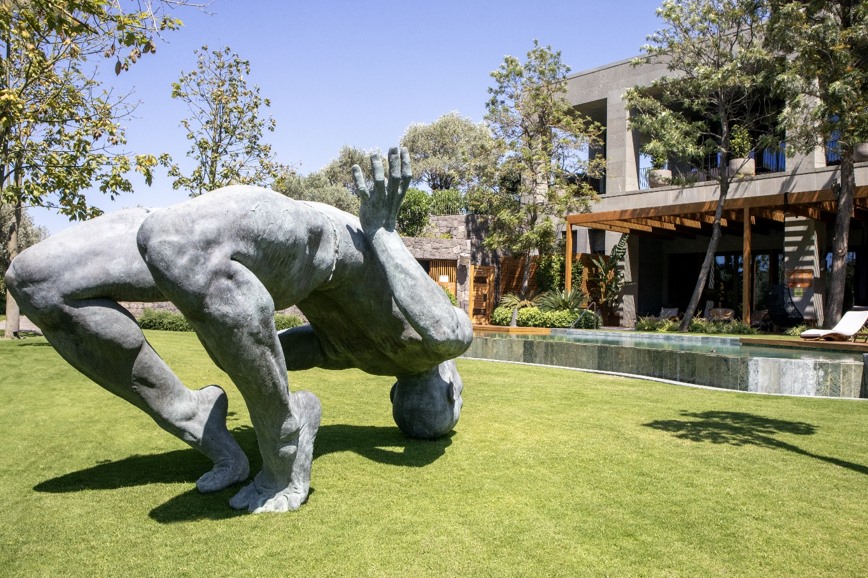
Threading through the exhibition is an interrogation of the body. Among the newly created works is Ayça Telgeren’s concrete sculpture Pause, where the bodily posture draws on seated female figures of Cybele and Venus associated with pre-antiquity civilisations. The figure twists and folds, taking on an unexpected softness. Considering the relationship between body and space, the work captures a moment of respite, suspended between movement and stillness. As Telgeren describes, “I worked with the thought that the sculpture has been suspended in a moment of pause, imagining what it might have become had the movement continued.”
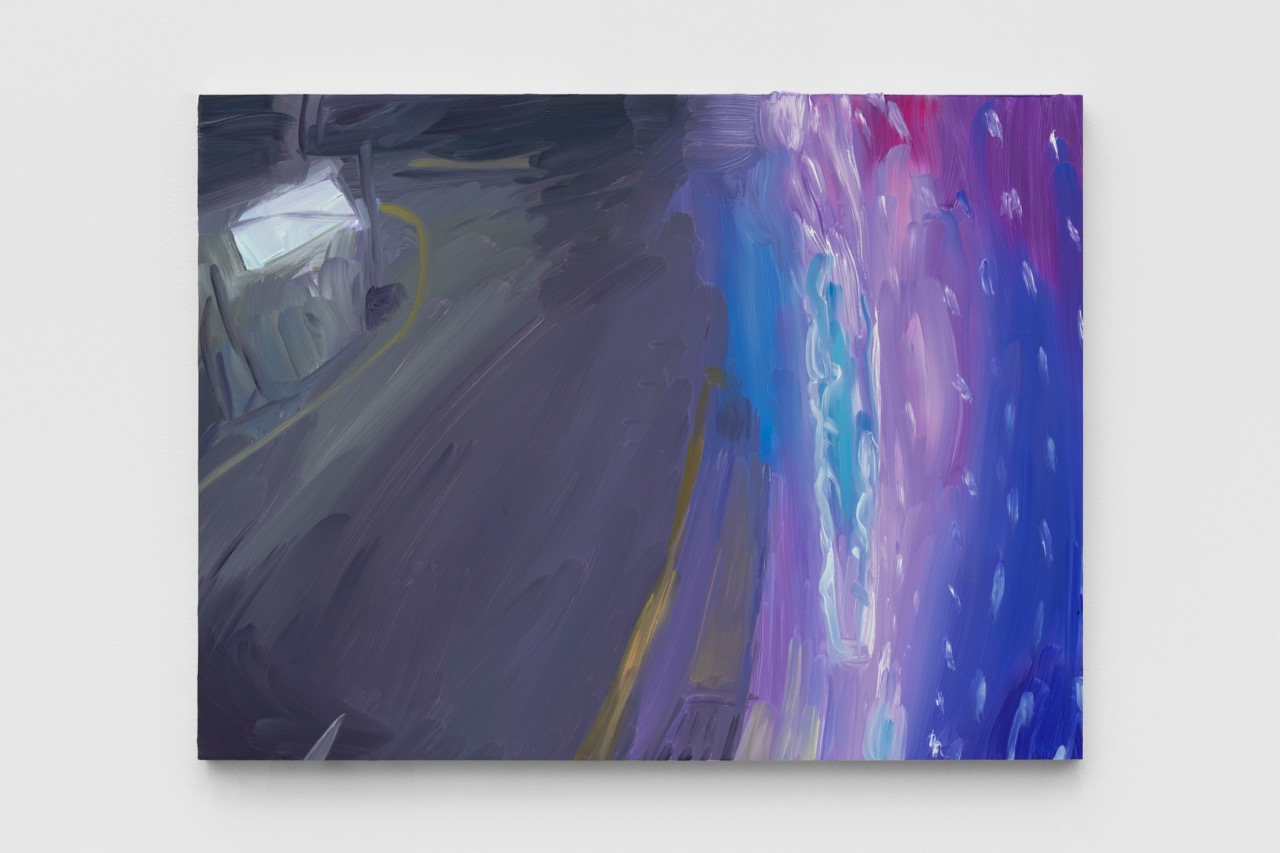
A softness reveals itself again in the painting of Defne Tesal, through her usual non-figurative approach. Tesal depicts her own reflection as an indistinct silhouette within the movement of water, the figure becoming absorbed into the surface rather than placed against it. A sense of disruption emerges through a change in direction of brushstrokes.


Margaret R. Thompson also presents a new painting that depicts her personal dreams through oils, collected earth, natural pigments, interference and temple oil on linen. Images of the Sirius Dog constellation embroidered in flying silk, apple trees, plants and wild flowers from the artist’s time collecting in the Santa Fe forest come together in a colour palette that nods to that which was used during the Renaissance period.
Elsewhere, Hera Büyüktaşcıyan’s Meadow portrays a petrified yet dynamic meadow through bronze sculpture, where wildflowers and stems gather into a resilient constellation. Suspended between stillness and movement, the work reflects the artist’s long-standing interest in the fragile relationship between nature and the human condition, and modes of resistance.

Spanning a range of mediums, the exhibition moves from painting and sculpture into photography, video and digital works. Nil Yalter, who has been represented by the gallery since 2011 and has had two solo shows with the gallery, returns with Skin Story. The video work engages with the ageing body and extends her decades-long exploration of body politics into the digital realm.
The historical works and evocative paintings of Semiha Berksoy and İpek Duben further extend the exhibition’s exploration of identity and self-representation, bringing the face and the body into focus as sites of emotional expression. Their inclusion reflects the breadth of Galerist’s programme, bringing together artists whose practices have shaped different generations of contemporary art in Turkey.
Labour of Love’s exploration of self-portraiture also extends beyond representations of the face or body. Burcu Yağcıoğlu’s new work turns inward, presenting the immune cell in its microscopic entirety on a larger scale through pencil, aquarelle and acrylic on paper. The work connects to the nazar boncuğu, the traditional glass eye used in Turkey as a protective talisman: “The work honours this extraordinary and intricate mechanism within us. It proposes that protection does not consist only of hardness or aggression, but also of attention, contact, discernment, and the capacity to remain in active relation with a living environment”.
Similarly, Elif Uras, who has shown repeatedly at the gallery since 2004, reaches into the internal emotions through the beautiful Hearts Labor sculpture. Standing proudly in the middle of the gallery’s floor, the sculpture depicts intricate scenes in glaze and gold luster, combining traditional craftsmanship and fine art.

Fashion textile is used to convey the idea of the body as a carrier of experience in Hussein Chalayan’s Airmail Dress – Silver Transmission. Rooted in Chalayan’s childhood between London and Nicosia, the work responds to experiences of distance, movement and separation. Designed to function simultaneously as a dress and as a package that can be folded and mailed, it transforms the body into something capable of being transported. While Chalayan does not consider this work a conventional form of self-portraiture, Airmail Dress – Silver Transmission carries traces of his personal experiences while extending them into a more universal reflection on displacement, connection and the desire to overcome physical distance.
Extending the exhibition’s engagement with pertinent themes of memory and movement, the relationship between migration and place is also explored in Hüseyin Bahri Alptekin’s series of hotel signs, H-Fact: Hospitality/Hostility. Created from photographs taken during his night-time walks through Istanbul in the early 1990s, they focus on how spaces are inhabited by migrants, travellers, businessmen and those waiting to cross into Western Europe. The viewer is invited to look more closely at the spaces around us, and ultimately, to look inward.

Elif Uras, artist, says, “I opened my first solo exhibition at Galerist in 2004. Since then, I have held solo shows at other international galleries as well, and it’s worth noting that none of those galleries are still around today. The wonderful, predominantly female team running the gallery today is truly extraordinary in their support, professionalism, loyalty, and passion. What’s more, I feel deeply honored to call them not only my colleagues, but also my friends.”
Through more than 200 exhibitions, Galerist has built a programme supporting successive generations of emerging and established artists, stewarding artists’ estates and fostering connections between Turkey’s contemporary art scene and international audiences. Defined by artist-centred programming, equal gender representation and a commitment to diverse artistic practices, the gallery has established itself as one of Turkey’s leading contemporary art galleries.
On view until 7 November 2026, Labour of Love features works by :mentalKLINIK, Hüseyin Bahri Alptekin, Haluk Akakçe, Yeşim Akdeniz, Rasim Aksan, Francesco Albano, Semiha Berksoy, Hera Büyüktaşcıyan, Taner Ceylan, Hussein Chalayan, Michael Craig-Martin, Ergin Çavuşoğlu, İpek Duben, Ayşe Erkmen, Leylâ Gediz, Kendell Geers, Mustafa Hulusi, İdil İlkin, Merve İşeri, Şahin Kaygun, Nuri Kuzucan, Arik Levy, Merve Morkoç, Youssef Nabil, Julian Opie, Lara Ögel, Serkan Özkaya, Güçlü Öztekin, Seza Paker, Thomas Ruff, Sarkis, Yusuf Sevinçli, Erinç Seymen, Arslan Sükan, Murat Şahinler, Ali Emir Tapan, Evren Tekinoktay, Ayça Telgeren, Defne Tesal, Margaret R. Thompson, Gavin Turk, TUNCA, Elif Uras, Viron Erol Vert, Erwin Wurm, Nil Yalter, Burcu Yağcıoğlu, and Nazım Ünal Yılmaz.

About Galerist
Founded in Istanbul in 2001, Galerist is one of Turkey’s leading contemporary art galleries, playing a significant role in shaping the country’s contemporary art landscape through exhibitions, publishing, research and long-term collaboration with artists. Over the past twenty-five years, the gallery has championed emerging and established artists while fostering connections between Turkey’s contemporary art scene and international audiences. Shaped by women’s leadership and a longstanding commitment to gender equity, Galerist has developed an artist-centred programme spanning generations, geographies and artistic disciplines.
Galerist has presented more than 200 exhibitions and represented nearly fifty artists from Turkey and abroad, encompassing emerging and established practices alongside artist estates. The gallery regularly participates in leading international art fairs, including Art Basel, Frieze, Paris Photo and The Armory Show, while also developing collaborative projects with museums, institutions and galleries in Turkey and internationally.

Since 2011, Galerist has been based in Passage Petits-Champs, a nineteenth-century landmark in Istanbul’s historic Pera district. Alongside its year-round exhibition programme, the gallery develops collaborative, site-responsive projects which expand beyond its exhibition space, in partnership with museums, institutions, and fellow galleries.
Publishing has remained central to Galerist’s practice since its founding. Through Galerist Publications, the gallery has produced monographs, exhibition catalogues and artist publications, including titles dedicated to artists such as Nil Yalter, Semiha Berksoy, Taner Ceylan, Yusuf Sevinçli and Elif Uras. In 2006, Galerist founded Art Unlimited (formerly Galerist), a contemporary art and culture publication that has continued independently since 2015 as Unlimited Publications, contributing to critical discourse around contemporary art in Turkey and beyond.


For more information, please visit https://www.galerist.com.tr/ and @galerist_tr.