The exhibition, curated by UK independent curator and writer James Putnam, features 40 new sculptures and installations created specifically for this context. Moving beyond human-centred perspectives, it examines the relationship between living organisms and the inorganic environment, focusing on transformation, interdependence and coexistence.

Spanning the three floors of the Palazzo’s history-marked, transient structure, the exhibition is shaped by the building itself as much as by the works inside it. The palazzo operates as an active framework where space, history and repair influence how the work is read. Moving through the building, visitors encounter a sequence of environments that shift in tone and logic rather than following a fixed narrative. Vanmechelen describes the palazzo as a structure that “writes back”, where meaning changes through encounter. Works reappear in different configurations across the space, reflecting a process of evolution that extends beyond the studio into the architecture itself.

At the centre of the exhibition is a shift away from human centrality and fixed systems of control. In We Thought We Were Alone, a globe topped by a monkey disrupts the assumption of human authorship over the world, introducing a sense of shared and competing agencies. Across the exhibition, animals return the viewers gaze and appear as active presences rather than representations, forming what Vanmechelen refers to as a ‘parliament of animals’. These presences are not metaphorical but operate as dynamic counterparts within a shared space of existence. In parallel, the exhibition destabilises fixed categories such as predator and prey. These roles shift and overlap depending on context, creating a condition where dominance, vulnerability and survival are continuously in flux rather than predetermined states.

This sense of instability runs through both the material and conceptual structure of the works. Materials including bronze, marble, glass, photography and video are used as interconnected systems rather than isolated objects, shaped by Vanmechelen’s view that energy and mass are interchangeable. Sculpture is treated less as a finished object than as something altered by placement, movement and encounter. Within this framework, classical references are reworked through hybrid anatomies combining human, animal and symbolic forms. The medusa sculpture Evolution, for example, is no longer presented as a fixed mythological warning but as a figure of transformation, where perception itself becomes unstable and open to change.

The egg recurs throughout the exhibition as a form that suggests openness and uncertainty, emphasising that what emerges is not fixed or predetermined. One of the central installations, I Never Lost Paradise, takes the form of a traditional Venetian chandelier structured around a painted bronze femur, with glass snakes coiled through its frame. Light functions not as purity but as direction, introducing a tension between temptation and choice. The work reflects on Venice as a place of continual return rather than a lost origin, where paradise is repeatedly re-entered and reshaped through transformation.

Cosmopolitan Fossil is an extraordinary bronze sculpture of a child struggling to hold an imposing iguana. The figure appears to carry the weight of civilisation while remaining embedded within an evolutionary process. The work reflects on the limits of human control over nature and the persistence of what Vanmechelen calls the wild gene – a force that resists domestication even within systems designed to contain it. In this sense, the sculpture can be read as a form of self-portrait.

The exhibition includes We are the Other, an installation of painted bronze sculptures with hybrid human and animal features arranged along a catwalk. Drawing on the language of theatre and presentation, the work stages bodies that are openly exposed to view yet resist easy interpretation. Accompanied by Radiohead’s Feral, the space becomes restless and unstable. These are not ideal forms or fixed identities, but figures shaped through distortion, crossing and change, questioning how long existing categories can still hold. Here, the ‘we’ that begins as a biological or social condition becomes theatrical: a shared scene in which we present ourselves to one another as hybrid and uncertain.


This sense of tension is extended in Under Pressure, where a cheetah, built for speed, is halted against a transparent glass barrier already marked by bullet holes. Vision is allowed, movement is denied. Human and animal are brought close yet remain separated, with violence already inscribed into the surface between them. The work does not resolve this tension but makes it visible.
The exhibition consistently reverses assumed hierarchies between humans and animals, redistributing agency and vulnerability rather than fixing them in place. In one instance, a conversation between a human figure and a chicken unfolds outside traditional structures of authority and communication, pointing to forms of knowledge that exist beyond human systems. Nature is presented not as background but as an active intelligence, in which animals and environments carry knowledge that humans are invited to observe, listen to, and engage with, positioning humanity as one part within a wider, interconnected field of life.


Koen Vanmechelen says: “We thought we were alone, but that idea does not hold once you enter the space. Everything responds. Animals are not symbols, they are presences. The question is no longer whether we are at the centre, but how everything is connected and how that connection keeps shifting.”
The exhibition continues Vanmechelen’s long-term Cosmopolitan Chicken Project, a transdisciplinary exploration of biocultural diversity, identity and interspecies exchange. This extends into his wider ecosystem at LABIOMISTA in Belgium, a 24-hectare cultural landscape where art, ecology and community systems intersect under the framework Never Alone.
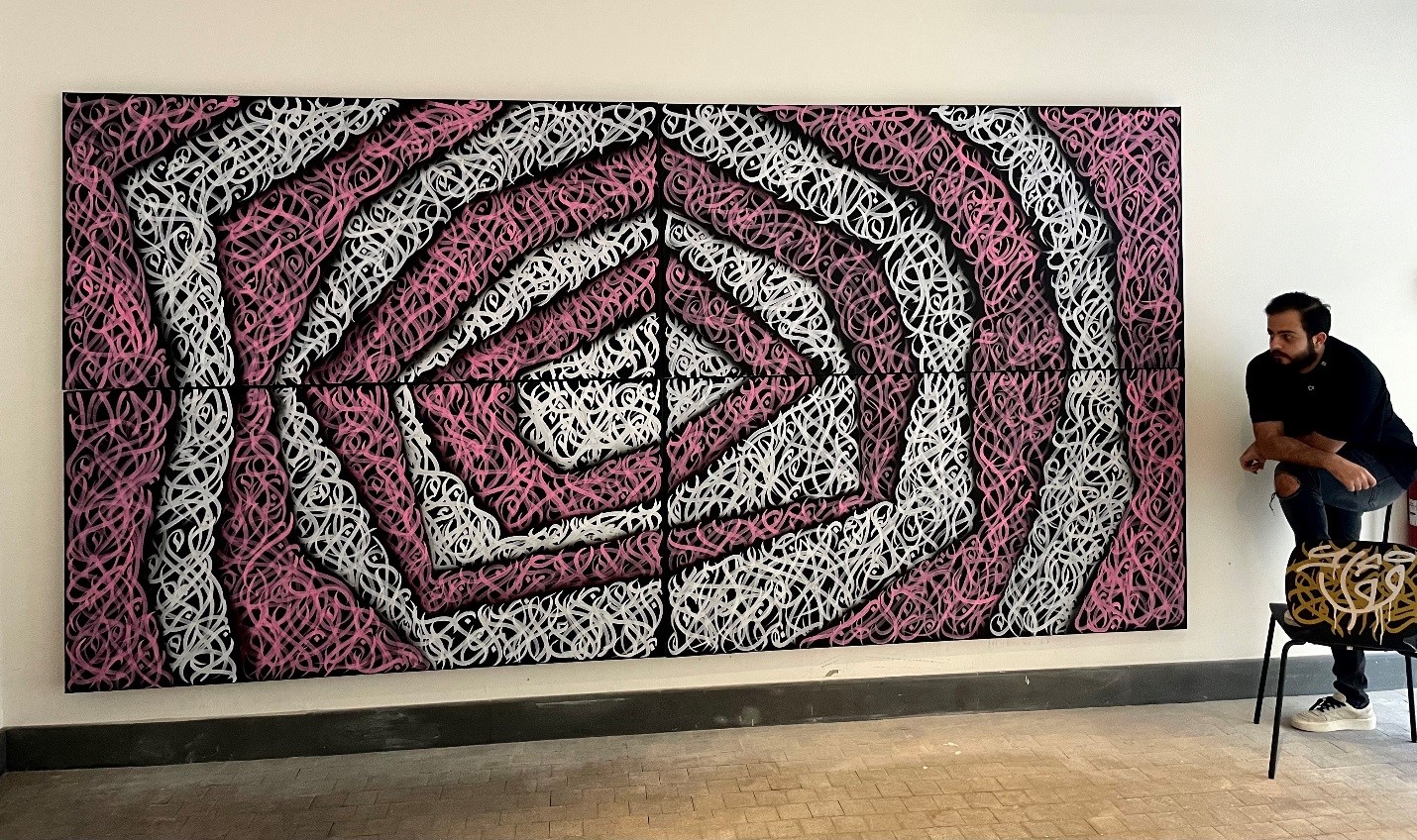
In dialogue with the Venice Biennale theme In Minor Keys, the exhibition features a dedicated room exploring Wild Gene Festival, a collaborative project between Koen Vanmechelen and celebrated Senegalese musician Youssou N’Dour. Originally staged on 1 August 2025 at LABIOMISTA, the festival transformed the site into an open-air stage, bringing together live music performed by Youssou N’Dour and Le Super Étoile de Dakar with Vanmechelen painting a monumental nine-metre canvas in real time. At Palazzo Rota Ivancich, the project is presented through two videos that document both the performance and the wider community involved, creating a shared space of sound, gesture and collective creation that extends the exhibition’s focus on collaboration, ritual and interconnected forms of life.

Youssou N’Dour says: “The Wild Gene Festival installation in Venice transforms the Palazzo into a place where art and music combine, inviting visitors to experience and celebrate the rhythms of creativity and connection through this sonic architecture, bringing sound, gesture, and colour together to reflect identity, community, and the living dialogue between humans and nature.”
Curator James Putnam says: “Vanmechelen’s work goes beyond the idea of interconnected life and engineers conditions in which it becomes visibly unveiled. By staging hybrids, thresholds and fragile systems across the palazzo, he turns a familiar premise into a physical experience: a continuous negotiation between form and transformation.”
About Koen Vanmechelen

A Belgian conceptual artist whose work explores biocultural diversity through a sustained dialogue between art, science and society. He is best known for long-term projects including the Cosmopolitan Chicken Project, and for creating platforms where research, participation and art meet, such as LABIOMISTA in Genk.
Vanmechelen’s work investigates identity, diversity and global interdependence through long-term projects at the intersection of art and science. He translates research into sculptures and installations, often developed through collaborations with scientists and communities. The result is an evolving body of work that treats diversity not as a theme, but as a method.
In 2010 he received an honorary doctorate from Hasselt University. In 2013 he won the Golden Nica (Hybrid Art) at Prix Ars Electronica and received the Global Artist’s Award in Venice. His work has been presented internationally, including at the Uffizi Gallery, the V&A and ZKM, and featured in major recurring exhibitions such as the Venice Biennale, dOCUMENTA (13) and Manifesta 9. He has been invited to speak at the World Economic Forum (2008) and at TED events.
For more information, please visit HOME | koenvanmechelen and Homepage | LABIOMISTA and follow @koen.vanmechelen.